
Herpes and Dog Training
Herpes is an incredibly frustrating virus in that once you've caught it, it stays with you for the rest of your life.

13. april 2018 · 4 min read
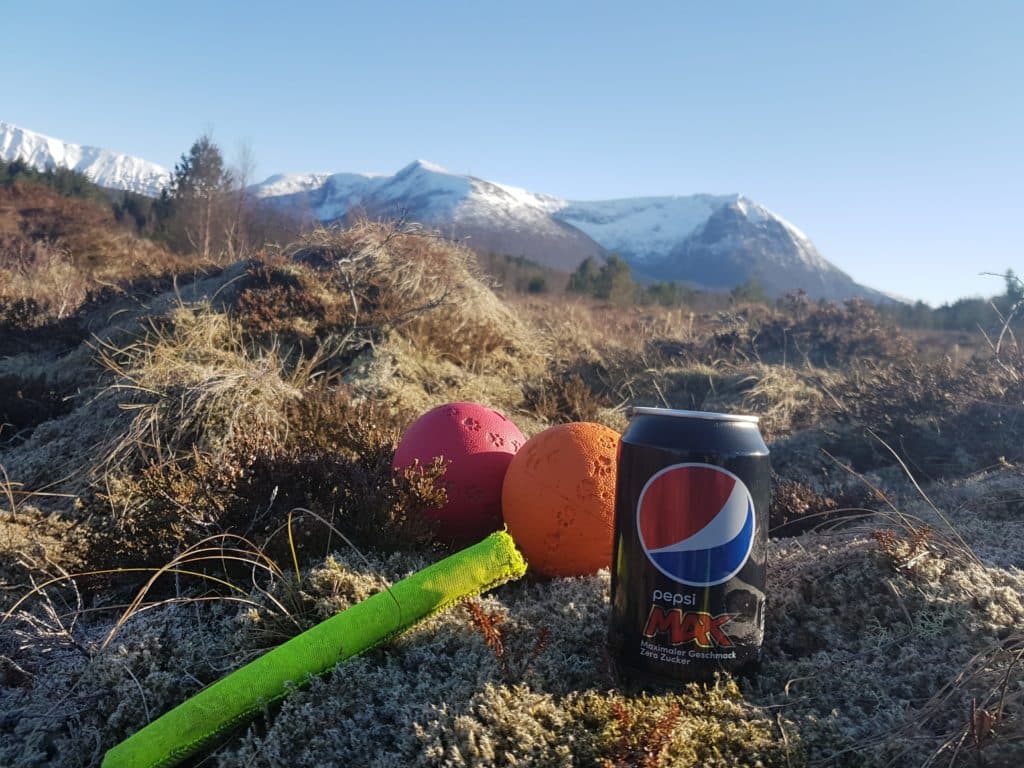
Even though it's not visible all the time, it's there, ready to pop up as an annoying (and visible) sore right when it's least convenient. When you're trying to impress your new crush, or getting a portrait taken. The rest of the time it's your own, dark secret. I'm sure many would like both a cure and a reliable vaccine against this virus.
Let's say we're not actually talking about herpes here – that shouldn't come as a big surprise. What we're actually talking about is false alerts in search work – whether it's rundering or other forms of search where the dog is supposed to alert its handler with a retrieve collar about having found a person or object. False alerts actually cover quite a lot of ground, and it can be either the dog alerting when it hasn't found anything (or before it has actually located what it's found), or the dog not alerting when it should have. The sores can look a bit different, but the virus is the same.
The brilliant thing about false alerts is that there's a pretty good vaccine against them – and the vaccine can also be administered after you've already got the problem, and thus be used as a cure. And even though you can't guarantee complete recovery, at least it's a cure that works if you're sensible and take your medicine often enough. You risk it flaring up at a bad time (like during an A-test, when you've pushed things harder than usual), but you've at least done what you can to minimise the damage.
The vaccine against false alerts is simple:
- Teach your dog to search and find before it learns to alert
- Alternate between direct reward, release bite and retrieve collar during search training, even after you've finished the foundation work and started competing or working
- Place primary emphasis on direct rewards and release bite alerts, but remember to regularly check that the retrieve collar alert is still in the dog's repertoire
- Have the decoys hold back the clicker for two seconds on direct rewards, to vaccinate against the dog becoming too quick to hunt for the bite (the first symptom of a potential snap-biter is that it starts becoming quick to alert)
- If you have a dog that takes the retrieve collar before it's been with the decoy for 2 seconds, you should be extra conscious about running a lot of direct reward, and be extremely careful about running many retrieve collar alerts
- The dog's first thought when it reaches the decoy should be whether it gets a reward straight away, then it should hunt for the release bite, and then it should take the bite – then you're fairly sure the dog won't start picking up the bite earlier and earlier
- If the dog takes more than 3 seconds to start hunting for the bite, or leaves the decoy without alerting, the solution is to run so many release bite alerts and retrieve collar alerts that the dog approaches the 2-second rule
- If the dog has false-alerted once, or started to snap at the bite from a distance, the points above apply – but this should be counted as treatment rather than prevention, and you can no longer talk about vaccination. Then the points above are all the more important.
There's a widespread belief in the search world that once the dog has learned to alert, it should always alert. Some go so far as to say the dog should only alert with the retrieve collar from the moment it's learned to pick it up at the decoy. If we translate that thinking into the analogy above, it roughly corresponds to kissing someone with weeping sores all over their face. Some even reward the alert inside their own home before sending the dog on the search. Without taking it too far, I think that must be equivalent to unprotected sex with someone who has weeping sores on their genitals. You're guaranteed to get problems you won't be rid of. Unfortunately, you can't get rid of the herpes virus – I can't help you there – but take a look at the cure above, and use it regularly.
More to read
Brukshund · 10. juni 2021 · 6 min
Baklengskjeding av Stigen – med startknappatferd
I dag hadde vi den femte økten på «Brukshundstigen», siden vi startet innlæringen av denne øvelsen for et par uker siden.
Morten Egtvedt
Brukshund · 23. mai 2016 · 6 min
Årets første runderingskurs
I helgen holdt jeg årets første runderingskurs i Silkeborg (Danmark) for en gruppe erfarne trenere, som i lengre tid har trent etter prinsippene i boka «Rundering i teori og praksis».
Morten Egtvedt
Brukshund · 8. juli 2015 · 3 min
Canis Clickercamp – Dag 5
Endre har en fin utfordring foran seg nå som han det neste året skal øke Embla sin kapasitet fra 400 til minst 800 meter, slik at de også kommer gjennom A-godkjenningen neste sommer.
Morten Egtvedt