
This Year's First Roundering Course
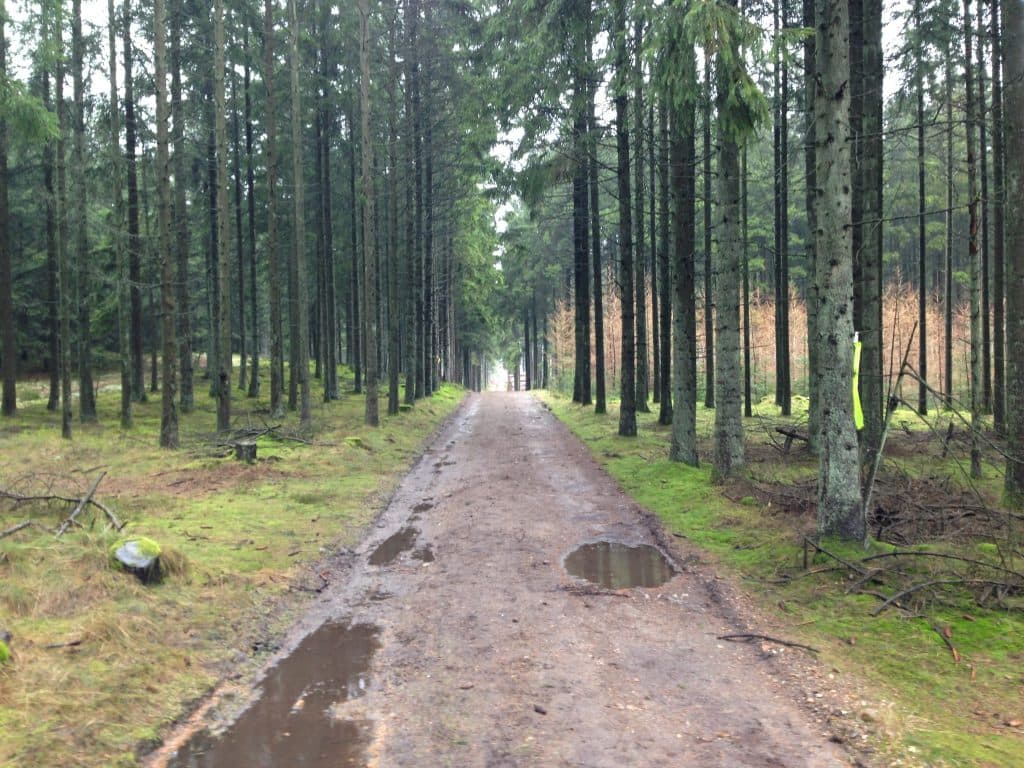
This weekend I held the year's first herding course in Silkeborg (Denmark) for a group of experienced handlers who have been training according to the principles in the book "Rundering i teori og praksis".

23. mai 2016 · 6 min read · Canis Hovedkontor · Canis Trondheim
After the final session, I asked them to summarise the key points from the weekend, and they came up with this list, which may be useful for others interested in rundering.
1. Only correct retrieves!
Would you bet 100 kroner that your dog will go out straight and far enough on every single retrieve? If not – run a handler-assisted retrieve beforehand instead of giving your dog the chance to practise poor retrieves.
2. Let the holding dog repeat several alerts per find
If your dog doesn't have 100% reliable holding (doesn't hold long enough, or can leave the decoy without holding first), it may be a good idea to run several repetitions for each find. Once the decoy has rewarded the first series of holding, the decoy can become passive again, and your dog should then continue to hold until the next click. 2–4 reps per find is about right. The decoy can vary their position for each repetition. Multiple repetitions (in the actual search situation) are what create flow!
3. 100% visible – or 100% hidden decoy!
In the book «Rundering i teori og praksis» we describe how we can shape the search pattern in rundering using decoys that are visible at the start, and then gradually move further out, and finally become hidden. But once you've trained in the search pattern, there's no reason to keep the decoys "partially hidden" anymore. Either you run a 100% visible decoy – for example, because you want to set up for a nice flying when your dog comes in from the other side. But if your dog doesn't need this extra help to search correctly out, you should hide the decoy completely. We don't want your dog running into the forest and spotting the decoy when it's come 40 metres out – then it should use its nose! And if you're running, say, a sound-assisted retrieve anyway, there's no reason the dog shouldn't be 100% hidden. The better you hide decoys in training, the more thorough your dog becomes at searching. (But remember point 2!)
4. Remember forest obedience – and make it voluntary!
Remember to train competition-realistic transports in training too – not necessarily on every find, but at least often enough that your dog knows them thoroughly. When it comes to control of your dog on the midline and otherwise, it's important that all control is voluntary. If you have to nag your dog to control it, you're laying the groundwork for conflicts between you and your dog on the midline, and this often negatively affects the search itself. Instead, teach your dog to VOLUNTARILY make contact with you, walk freely at heel, sit in the starting position, come all the way in to you and so on – without you having to nag it. Reward with a click/treat – or by commanding "search" (doggie-zen).
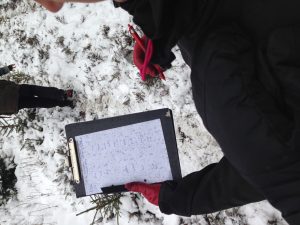 The training session is planned in advance – and the number of correct/incorrect repetitions is noted during the session.
5. Keep a training log!
How many finds/blinds did you have in training, and on which retrieves did you run finds/blinds? How many of the retrieves were correct on the first attempt? How many alerts/direct rewards did you run? How many times did you run a "flying", and how many times did you stop your dog on the midline? How difficult was this training course on a scale of 1–10? By keeping a bit of simple statistics on your training, you're able to plan a sensible progression, you avoid creating patterns your dog recognises (such as very often starting with a blind and then a find, rarely running 2 finds in a row and so on), and you can quality-assure that you're following the 80% rule on several aspects of the search.
6. 500 repetitions!
You rarely get real flow on the retrieve alert before you've run at least 500 correct repetitions (in the search – not just on the practice field).
7. Run competition-realistic training – especially at the start!
Let the start of your rundering training be as competition-realistic as possible. Don't let your dog stand and watch while you instruct decoys or hand out rewards. When you arrive at the start with your dog, the decoys should already be in place in the forest. Make this a good habit long before your dog is competition-ready.
8. Your recall signal is (can be) a click!
Searching straight out is reinforced first and foremost (variably) by your dog finding decoys. But you can also think of your recall signal as a click. The whistle signal should come when your dog is at 50–55 metres and still moving outward, or possibly when your dog after 50–60 metres has just begun to turn forward. Sometimes you reinforce your dog coming in to you directly with a ball/treat on the midline – other times you reinforce by running a flying (being allowed to search is very reinforcing if you've built up the search in a good way).
9. It's important that the decoy stays with the decoy as long as the decoy wants
Don't let your dog get into the habit of leaving the decoy before the decoy gives a clear signal that the reward is over. If your dog would rather run back to you, it's better that you walk out to the decoy on each find, and stand beside your dog and decoy while they finish playing before you take your dog back in. It's a bit more work than just letting the decoy become passive and your dog runs in again on its own, but it's a good investment to be careful that your dog stays with the decoy from the start. It makes it much easier to organise your training in future (you then have time to place the next decoy while your dog is playing).
10. Keep your head clear on the midline
As a handler, it's important to be calm and balanced on the midline. Don't walk about like one big stress ball – then you'll think very poorly and won't be able to solve situations that come up in a quick and flexible way. Of course, experience helps – but everyone can make a point of being more relaxed and enjoying themselves on the midline instead of running as if it's a matter of life and death or that everything MUST look perfect. Relax and train sensibly – then things gradually become more "perfect" along the way.
---
Rundering course with Morten?
Morten Egtvedt spends most of his time on training dog instructors, but he also holds a limited number of weekend courses in rundering each year, primarily for clicker trainers who want to train according to the main principles described in the book «Rundering i teori og praksis». If you'd like to book Morten for a rundering course in your district, you can get in touch for more information.
Canis Hundeskole also has many other instructors who are very skilled in rundering and other working dog training, so feel free to contact your nearest Canis instructor if you'd like to learn more.
Written by
Morten Egtvedt
Hovedkontor · Trondheim
Morten Egtvedt founded Canis in 1998. He has written three books and trained over 400 dog instructors in clicker training and reward-based dog training.
Se profil og andre artikler →More to read
Brukshund · 10. juni 2021 · 6 min
Baklengskjeding av Stigen – med startknappatferd
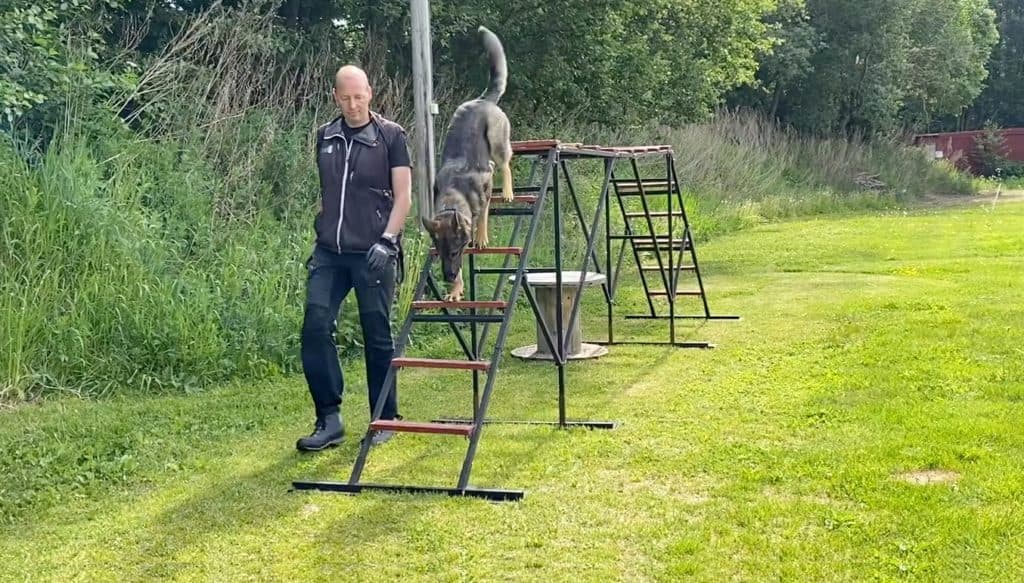
I dag hadde vi den femte økten på «Brukshundstigen», siden vi startet innlæringen av denne øvelsen for et par uker siden.
Morten Egtvedt
Brukshund · 8. juli 2015 · 3 min
Canis Clickercamp – Dag 5
Endre har en fin utfordring foran seg nå som han det neste året skal øke Embla sin kapasitet fra 400 til minst 800 meter, slik at de også kommer gjennom A-godkjenningen neste sommer.
Morten Egtvedt
Brukshund · 13. april 2018 · 4 min
Herpes og hundetrening
Herpes er et utrolig kjipt virus på den måten at har du først fått det, så er det der resten av livet ditt.