
Canis ClickerCamp – Day 1
What I want to highlight from the first day in the forest is the importance of centre-line obedience, which we write extensively about in the book "Rundering i teori og praksis".

4. juli 2015 · 3 min read · Canis Hovedkontor · Canis Trondheim
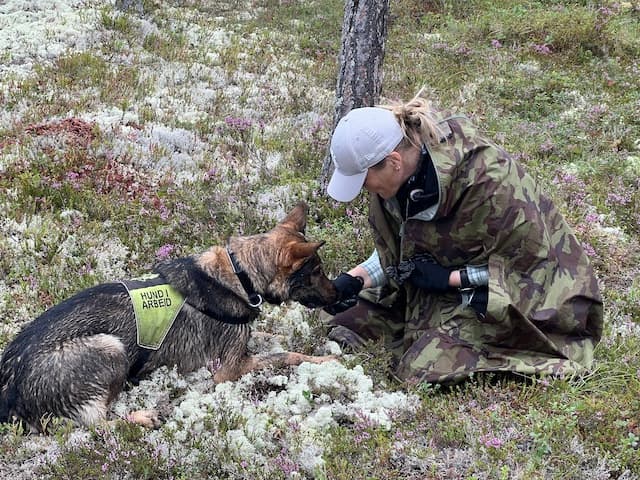
There are two reasons why midline obedience is important in nosework. The first reason is fairly obvious: it's easier to handle a obedient dog than a dog who's running the whole show itself (duh).
But obedience and control in themselves are actually not the most important reason to take midline obedience seriously. The most important reason is simply to increase the chances that the "rapport" between dog and handler is as good as possible throughout the entire search. Why is that so important, you might ask.
Much of the reason you'll find when you start to "stretch your dog", i.e. teach it to search progressively further without finds. The way you do this is fundamentally simple and straightforward learning theory: you simply reduce the reinforcement frequency (i.e. the number of finds in relation to blanks) gradually and unpredictably, and then the dog will eventually be able to search progressively further without losing its drive.
What I often see in nosework training, however, is that there's "something" that disrupts this seemingly simple process. And that something is precisely "poor rapport" between dog and handler. And the moment there's friction between dog and handler on the midline, it's as if all the world's gradual and intelligent increase in the number of blanks doesn't matter much anymore. Things break down regardless. In relation to stimulus control and chaining we often talk about "The poisoned cue". In nosework training, it's the dog's search that becomes poisoned when midline obedience is disrupted by nagging, shouting and other unpleasantness.
The whole point of midline obedience is that the dog should be able to control itself voluntarily. That is, the dog should voluntarily return to the handler during the search, the dog should voluntarily take up position to be allowed to run out on the search areas, etc. If you want to train midline obedience with traditional aversive training it's much better to leave it alone, as it only creates more counter-control and poor rapport (even if the dog perhaps doesn't dare do anything other than obey).
Obedience based on voluntariness from the dog, on the other hand, only creates better rapport the more obedient the dog becomes. And the most important thing about this is, as mentioned, not the obedience itself (although that's a nice bonus) – but that the dog can now search (and become increasingly persistent in its search) totally undisturbed by conflicts with the handler.
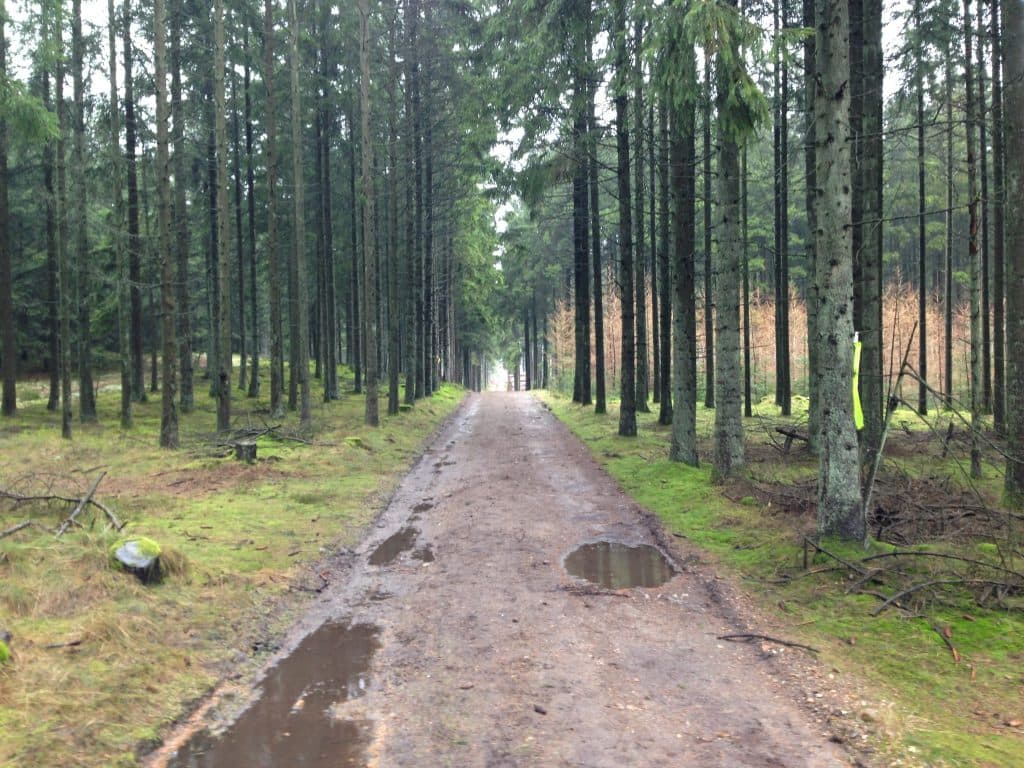
So find yourself a path in the woods, and start clicking for the entire repertoire of voluntary foundation behaviours you have. Teach your dog that offering behaviour voluntarily is just as good an idea in the woods as on the training field.
With this foundation, "stretching your dog" becomes a much simpler and straightforward process…
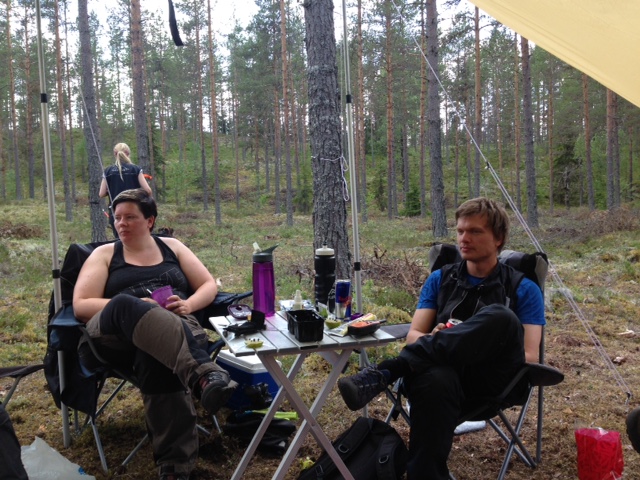 Linn and Endre celebrate in the tent during a rare break.
Written by
Morten Egtvedt
Hovedkontor · Trondheim
Morten Egtvedt founded Canis in 1998. He has written three books and trained over 400 dog instructors in clicker training and reward-based dog training.
Se profil og andre artikler →More to read
Brukshund · 10. juni 2021 · 6 min
Baklengskjeding av Stigen – med startknappatferd
I dag hadde vi den femte økten på «Brukshundstigen», siden vi startet innlæringen av denne øvelsen for et par uker siden.
Morten Egtvedt
Brukshund · 23. mai 2016 · 6 min
Årets første runderingskurs
I helgen holdt jeg årets første runderingskurs i Silkeborg (Danmark) for en gruppe erfarne trenere, som i lengre tid har trent etter prinsippene i boka «Rundering i teori og praksis».
Morten Egtvedt

Brukshund · 13. april 2018 · 4 min
Herpes og hundetrening
Herpes er et utrolig kjipt virus på den måten at har du først fått det, så er det der resten av livet ditt.