10-day challenge on Stay
Over the last 10 days, I've run a small 10 Day Challenge on "Stay" with the Shepherd Cuba (15 months).

2. juni 2020 · 4 min read · Canis Hovedkontor · Canis Trondheim
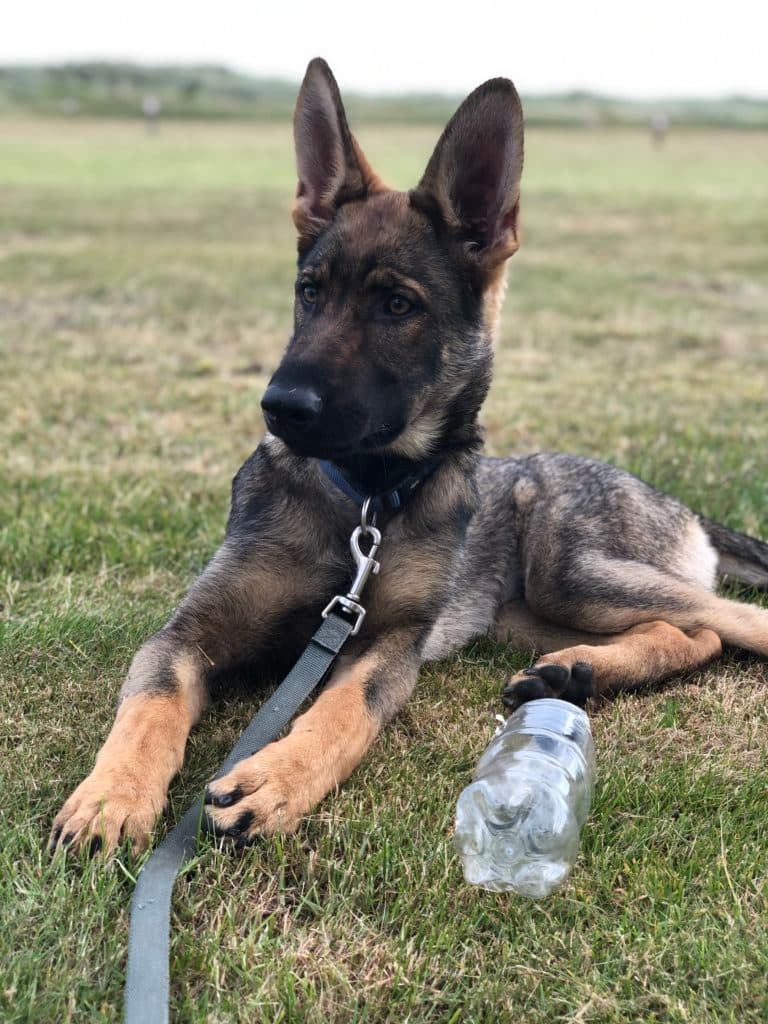
The goal was 10 minutes. We'd trained a lot up to 5 minutes, and she was very confident at that level. "Down stay" isn't particularly exciting to train, so I needed a little push to increase the duration of the behaviour enough that we'd have a good safety margin before we start training together with other dogs, as the working dog club gradually reopens for group training sessions again.
The challenge was straightforward: start with 1 minute, then increase by 1 minute each day until we reached 10 minutes. I reckoned it was quite manageable since we hadn't had any problems with the behaviour beforehand.
The "rules" for the challenge were that we needed at least one successful "official" repetition each day where she held the down for as many minutes as that day required. In this repetition, she shouldn't have a "warm-up" first, and no reinforcement for "down" before I left her. However, we could absolutely do more training sessions during the rest of the day where we reinforced after shorter durations etc (in short, do what was necessary for her to manage the requirement the next day too).
It went flawlessly up to 6 minutes. On day 7, she got up about halfway through (when the neighbour suddenly started something suspicious in the garden). The rest of the days went really smoothly, and I didn't need to do much extra training beyond the long, official repetition each day.
"Down stay" is the easiest behaviour in the world to train (as long as you haven't introduced any problems). The challenge is primarily to DO it often enough that you get good enough momentum with the behaviour. Creating a small "challenge" like this for yourself (or with training friends) where you focus on one specific behaviour over 3, 7, 10 or 30 days might be exactly what you need to reinforce your own behaviour sufficiently that you actually do the training work (even though the behaviour isn't particularly exciting to train).
One important detail when you run these challenges for yourself: WAIT to tell anyone about the challenge until you've completed it!
There are 2 reasons for this:
1 – if you post things on Facebook, talk about the challenge with friends etc before you're finished (or maybe even before you've started), you're not reinforcing the right behaviour for yourself. You're reinforcing "talking about training", not "training". Simply put, that's terrible timing. The same principle applies if you're planning to read a heavy textbook or something. Wait to mention it until you've actually read it!
2 – secondly, by telling people about "the challenge you're planning to do", you set up a negative reinforcement contingency for yourself. The consequence is no longer "the opportunity to tell people about it after you've done it" (positive reinforcement), but instead "discomfort at not doing what you've said you'll do" which you now have to train to escape (negative reinforcement).
Some people are comfortable working under negative reinforcement (they're effective just before deadlines etc), and we all have to do things under negative reinforcement control sometimes. But when you have the opportunity to arrange your environment in a more intelligent way, it's good to take it.
So now I've done the work, and I'm cashing in the reinforcer by writing this blog post! And we'll see if it increases the likelihood that I run more challenges like this on other behaviours later. 🙂
_PS: "Self-management" (that is, administering reinforcement contingencies for your own behaviour) is actually something we work a lot with in practice on Canis's clicker instructor course if you'd like to learn more._
Written by
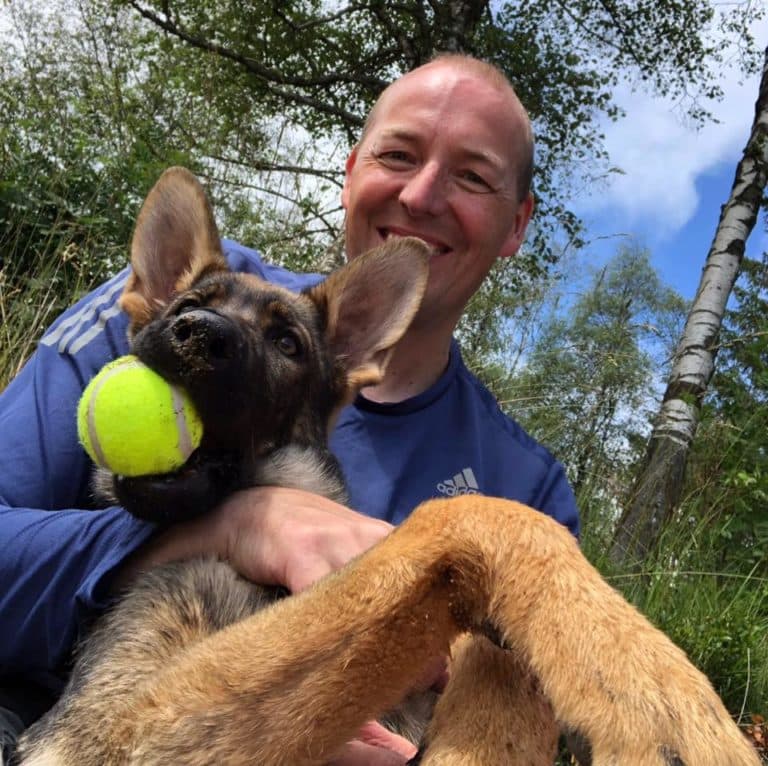
Morten Egtvedt
Hovedkontor · Trondheim
Morten Egtvedt founded Canis in 1998. He has written three books and trained over 400 dog instructors in clicker training and reward-based dog training.
Se profil og andre artikler →More to read
· 5. september 2019 · 2 min
Den første treningsøkten
I skrivende stund har vi hatt Cuba i 2 måneder og 1 uke, og grunnferdighetstreningen pågår for fullt.
Morten Egtvedt

· 28. januar 2018 · 2 min
Kriterieplan for å bli en rå klikkertrener
Jepp, det er mye å lære for en ny klikkertrener. Men mange har gått veien før deg, og her er stegene du erfaringsmessig trygt kan følge. Kos deg med treningen og stol på prosessen!
Morten Egtvedt

· 20. juli 2021 · 7 min
Med fare for å virke nyfrelst
Etter at Canisinstruktørkurset ble digitalt, har jeg fulgt det som observatør en rekke ganger. Det høres kanskje litt ekstremt ut, men jeg er faktisk ikke alene.