
Questions about recall training
Some breeds, such as certain spaniels, some retrievers, and some of the smaller breeds, appear to become very active in their bodies when they train (even when they are not working).

23. mai 2015 · 3 min read
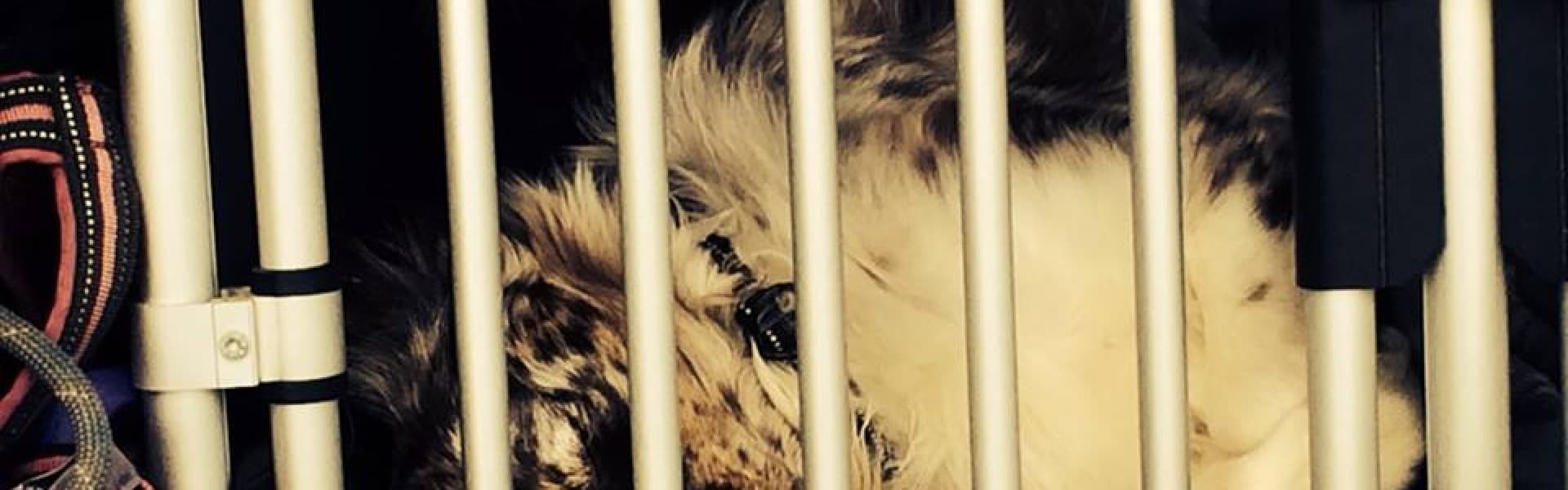
They can almost look hyperactive. While some stand and fidget with their whole body swaying from side to side, others resort to more acrobatic bouncing. Herding dogs, meanwhile, can become more frantic and make a lot of noise.
When you see a dog like this, it might seem natural to think they're dogs that need a lot of calm training, and if you search for calm training online you'll certainly find plenty of odd tips. What often comes with calm training is a lot of focus on the dog tolerating nothing happening. Finding balance between activity and inactivity, and letting the dog really use itself properly, seems to fade into the background (at least for the ones I've observed).
Could it be that instead of lots of calm training, clear criteria in training might give better results? When I train in front of others, one of my goals is not only for the dog to become more confident in what we're doing and show clear progress, but also for observers to be able to look at us and understand what the criteria are, without me needing to say anything. Clear and obvious criteria create less frustration for the dog. In addition, it creates space for the dog to use its energy in a purposeful way, especially if you manage to have such good progression that the dog is constantly being challenged. A dog that's worked well gets tired, and a tired dog relaxes more easily than a dog with surplus energy.
Why am I bringing criteria into this discussion? I observe quite a few dogs in training and in classes, and what I see is that when dogs don't know what's expected of them, their bodies start moving. When they understand what they're supposed to do, it seems like their whole system calms down, and they focus on the task. The flat-coated retrievers plant all four feet firmly on the ground, the gundog stands completely still with their whole body, the miniature pinschers stop bouncing like rubber balls, the herding dog works quietly and purposefully. All it takes is for you as a handler to set sensible criteria (with appropriate stress levels for the exercise) and communicate those criteria to the dog through good timing. If you also reward well, you get a dog that not only knows what it should do – it wants to do it too.
That doesn't mean all calm training is irrelevant. Some dogs really do need help finding their off-switch. But the dogs that need it are often the most driven, and/or the most easily stressed, and both of those need what I've written above. The driven dog really needs to use itself, and the easily stressed dog needs to know what it should do. And when you have that as your foundation, you also have a much better basis for succeeding with calm training.
What I've also noticed is that skilled trainers very rarely have stressed dogs. Skilled trainers know how to communicate what they want to the dog, and the dog often gets to use itself in a good way. That's why investing time in becoming a better handler is also an investment in having a well-functioning dog. How do you become a better handler? You train, you evaluate your training to make sure you're on the right track, and then you train more.
More to read

· 20. juli 2021 · 7 min
Med fare for å virke nyfrelst
Etter at Canisinstruktørkurset ble digitalt, har jeg fulgt det som observatør en rekke ganger. Det høres kanskje litt ekstremt ut, men jeg er faktisk ikke alene.
· 13. mars 2017 · 1 min
Feltsøk kurs på årets ClickerCamp!
**Feltsøk er en viktig del av flere av bruksprogrammene, og det kan være en veldig fin plass å sanke poeng.
· 7. mars 2017 · 2 min
Rundering the Canis way
Rundering er en sammensatt og veldig spennende hundesport som både er en konkurransegren, men også blant annet er en del av godkjenningsprogrammet til redningshunden.