
How to build a stable competition dog?
This film I've posted before, but it's so good and so spot on that it deserves a rerun!

17. august 2017 · 2 min read
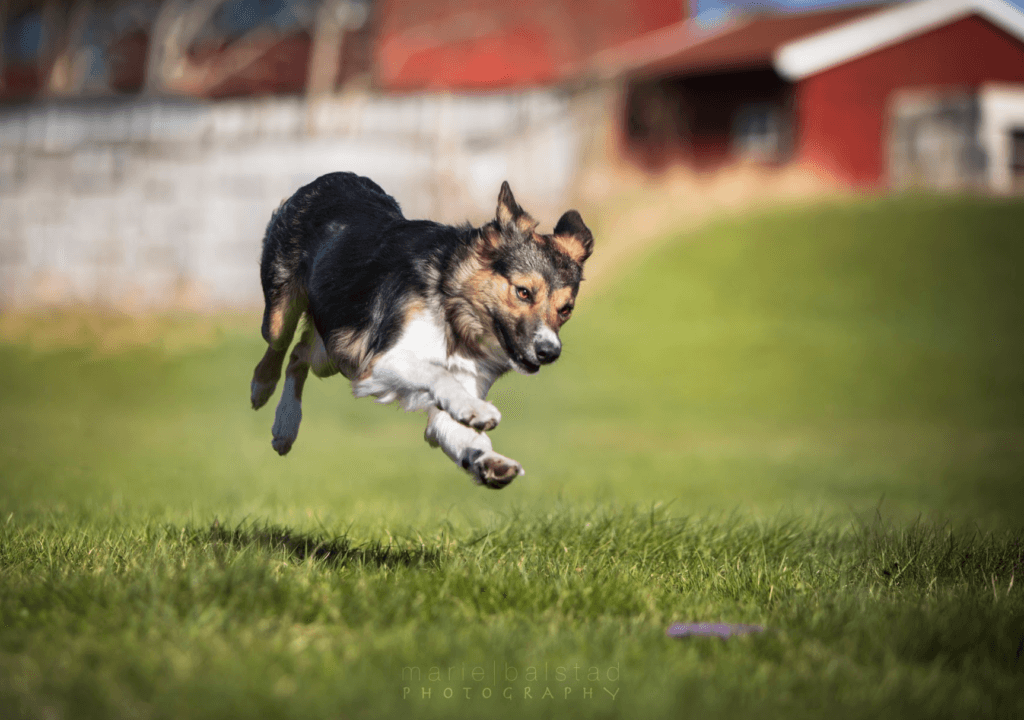
To become the best, you have to be willing to do the unglamorous work!
I still don't know what "the unglamorous work" is for me in dog training. I'm happy to tinker and refine foundation skills just as much as I enjoy working with competition exercises and chaining entire programmes together. Foundation skills are what determine whether you have a solid exercise or not. When you've worked well with foundation skills and later run into problems, it's easy to identify which foundation skill needs work, isolate it, train that skill separately, and then chain everything back together into the exercise again.
Bonus has done a lot of foundation skills work over the summer and has now started chaining exercises together — for example, distance commands. We're back-chaining the steps and have set the "res" cue (down to stand) as the final step because it's been her weak point. By making this the last step in our back-chain, we reward it many times and work effectively with it. She's building stronger expectations around a step that was previously difficult and may have knocked her confidence a bit.
Do you want to build a solid foundation for a puppy, adolescent or adult dog aimed at obedience programmes? Refine details and improve foundation skills in a dog already competing?
[On this course](http://canishundeskole.no/kurs/grunnferdigheter-online-2/) you can work with the foundation skills you need to develop stable competition exercises in obedience programmes across multiple disciplines — competition obedience, rally obedience, IPO, working trials and DCH.
The course has 23 different topics and a total of 96 different exercises, plus 4 bonus exercises.
The course starts 1 September and runs for a full 3 months, so there's plenty of time to work through all the exercises.
As a participant, you can submit and receive feedback on an unlimited number of videos.
As an observer, you also get access to all the exercises and can ask general questions about them, but won't receive feedback on your own training — as it's difficult to give feedback on something I haven't seen.
The exercises are presented with video, text and images.
All exercises are available from the start, so you can begin working with exactly what you want to focus on.
More to read
Konkurranselydighet · 8. august 2020 · 2 min
Innlæring av dekk under marsj
Videre derfra ser jeg på alt som en forstyrrelse. Jeg endrer posisjoner, først sittende, før jeg så reiser meg opp og også legger på bevegelse.
Konkurranselydighet · 13. august 2019 · 2 min
Låste frambein vs låste bakbein i avstandskommandering del 3
Hva er mest populært nå for tiden? Tidligere hadde veldig mange låste bakbein, men gjennom de siste årene har det kommet flere og flere med låste frambein.
Konkurranselydighet · 1. august 2019 · 2 min
Låste frambein vs låste bakbein i avstandskommandering del 2
Hva gir mest trekk? Det som gir mest trekk er dårlig utførte øvelser, uansett hvilken øvelse det er snakk om.