
Konkurranselydighet·Læringsteori
Hard data is sexy
Cuba's chin target has been "okay", but she hasn't really "stuck" to the hand before. Usually she's gone a bit with the chin target, then slid forward slightly and come back again.

17. august 2020 · 3 min read · Canis Hovedkontor · Canis Trondheim

Today I got a bit frustrated with this, so I decided to teach it properly. The criterion was now increased to "do it correctly from start to finish" to avoid unintended chains where she slides a bit forward and back. When we went for a walk in the forest earlier today, we played around a bit "unsystematically" with this on the trail, and managed about "5 correct steps from the start" at best.
We continued working on increasing duration at home in the garden when we got back. During this session we increased from 5 to 35 steps. When she goes too far forward, I start to back up, and she then has to back up to the target hand before I start moving forward again. The reinforcer is in other words BOTH "that I move forward" AND that I click and reinforce with the ball.
What's quite useful to know about this session is that I count every single step I take. And before a new repetition begins, I've always decided in advance to click after approximately 5/10/15/20/30 steps. When your goal is to increase the duration of a behaviour, it's VERY useful to have full control of the data throughout instead of "playing it by ear". If you think about things like "focus", "concentration" and other woolly/abstract concepts, it's very easy to slip into a pattern where you just get stuck at the same criterion (or, you don't know if you're progressing or not) – you just "have a feeling" at best.
For me, dog training is largely about hard data. "Hard data is sexy" is what I say to the tedious bits at the clicker instructor course every year. We've even hired in what's arguably the world's leading expert on such behaviour measurement, who gives a guest lecture at the instructor course for the last 5 years (Dr. Rick Kubina).
As far as chin target/free heel behaviour goes, I'm not entirely sure what a sensible fluency criterion is yet (i.e. the number of steps at which the dog "can't make a mistake anymore"). It probably lies around 300 consecutive steps. I set myself a sub-goal of 100 consecutive steps initially. I might not need more than this, since at some point I'll start to fade the chin target and replace it with the dog maintaining the same position without help from the target hand (and it's better to get 300 steps without help from the target than with it).
The point of writing this is to highlight that it's useful to have a fixed number (hard, objective data!) to work towards regardless of which behaviour you're training. Then you can keep track of the numbers continuously so you can increase criteria in appropriate steps, and see that your training is actually progressing. If it's not progressing, that's a clear signal to "do something different". If it is progressing, you just keep going the same way. We did, and a couple of days later we had 100 steps.
What are you going to train today? What duration/frequency is the end goal for the behaviour? How many repetitions per minute can a "fully trained" dog perform on this behaviour? How far have you got before the session begins, and how far do you hope to reach during today's training?
Starting to think a bit more "data-driven" in this way can work wonders for your dog training. Not least, it's usually very reinforcing for the handler to see tangible evidence that things are progressing.
Written by
Morten Egtvedt
Hovedkontor · Trondheim
Morten Egtvedt founded Canis in 1998. He has written three books and trained over 400 dog instructors in clicker training and reward-based dog training.
Se profil og andre artikler →More to read
Læringsteori · 28. juli 2026 · 1 min
Podcast med Morten Egtvedt & Lundqvist Hundeskole
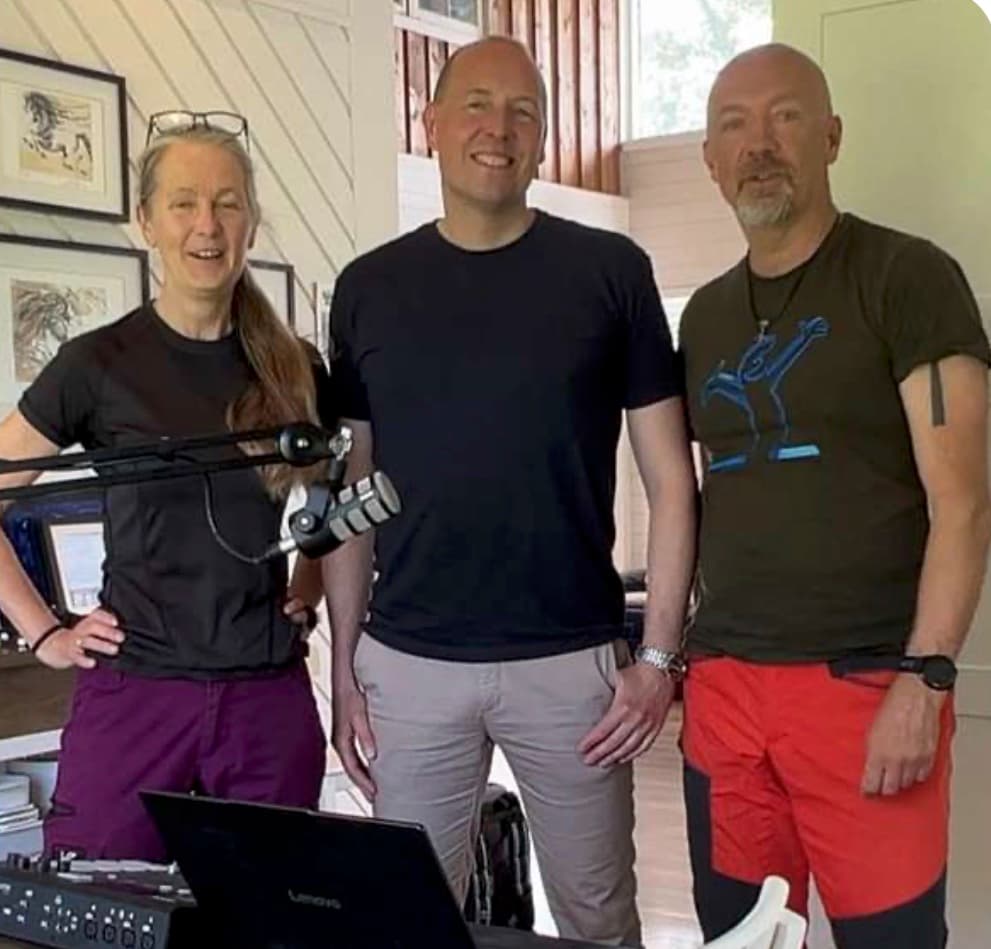
Ingerid og Vegard fra Lundqvist Hundeskole er på kursturné i Midt-Norge, og benytter sjansen til å svippe innom Morten Egtvedt fra Canis Hundeskole for hyggelig besøk og podcast innspilling.
Morten Egtvedt
Læringsteori · 19. august 2017 · 3 min
“Hunden min vil ikke leke”
Det er ikke uvanlig at jeg møter hundeeiere som beklager seg over at hunden ikke kan eller vil leke med dem.

Læringsteori · 10. mars 2026 · 3 min
Bruk av feil-signal forsinker treningen
I Psychology Today kan vi lese en veldig bra artikkel som tok for seg en problemstilling hundetrenere har diskutert i mange år.
Morten Egtvedt