
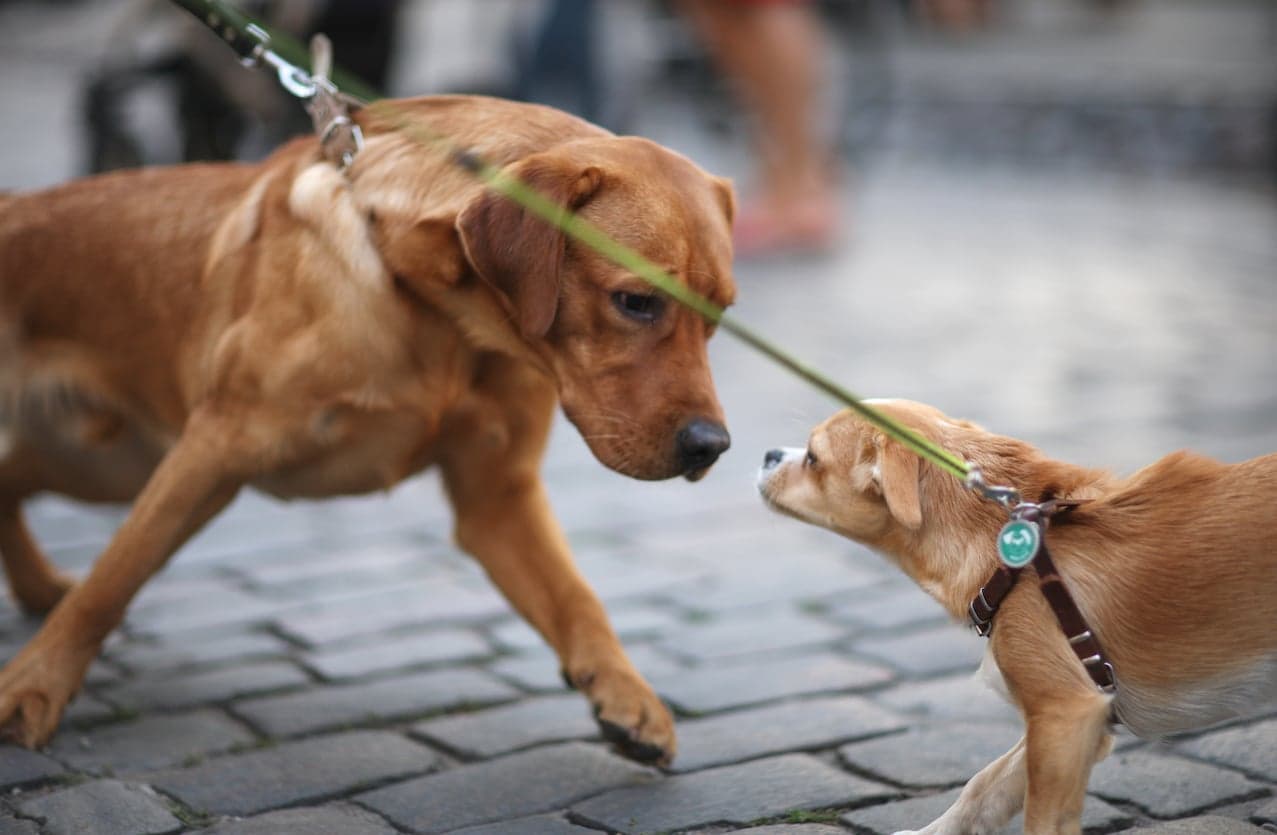
Is meeting other dogs or people on walks stressful? Then this course is for you!
Do you have a dog that becomes very interested, stressed, anxious or overexcited when you meet other dogs or people?
On this course, you'll learn how to train passing skills in a systematic way – and most importantly, how to make those skills work when you're actually out on a walk.
What's unique about this course is that we don't stop at controlled training situations. We take your passing skills out into real walking areas, where we practise with what you actually encounter along the way.
After all, passing skills should work on walks – not just at the training ground! 🐾
🐾 First we build the skills – then we take them outside
The course starts with a weekend workshop where we combine theory and practice. Here, both dog and handler get the chance to refine passing skills in controlled situations, so we build a solid foundation before taking training further out on walks.
After that, we meet for four practical evening sessions. These consist of shared passing walks in different walking areas, where we practise passing dogs and people in more realistic situations.
Throughout, we adapt the training to each individual dog and handler team. The goal isn't just to get through a passing, but to create positive experiences, confidence and progression.
🎯 On the passing course, we focus on:
- Learning good passing skills
- How to structure training so your dog succeeds
- Theoretical overview of passing challenges
- Different techniques and strategies for passing
- Dog body language and how we can read your dog's signals
- Passing both dogs and people
- Passing in different situations and environments
- The transition from controlled training situations to realistic walks
- How to handle unexpected situations on walks
- Positive experiences and confidence for both dog and handler
- Individual adaptation, success and progression
📚 How the course is structured
The course runs over one weekend workshop and four practical evening sessions.
💻 Theory and practice
At the weekend workshop, we cover relevant theory and practise in controlled situations.
🐕 Four practical evenings of 1.5 hours each
We meet out in different walking areas and practise passing in realistic situations. You'll receive guidance throughout and have the opportunity to adapt the training to your specific dog.
📖 Course compendium
You'll get access to articles and other relevant and interesting content that supports your training throughout the course.
🎥 Web-based lessons and instruction videos
You'll get access to short lessons and instruction videos on the topics we're working with.
👥 Dedicated Facebook group
In the group, you can ask the instructor questions, get support throughout and share experiences and progress with other course participants if you wish.
🏠 Homework and fun challenges
Between sessions, you'll get concrete tasks and small challenges that make it easier to keep training going at home and on your own walks.
🗓️ The course consists of:
1 weekend workshop
10.00–16.00 both days
4 practical evening sessions
1.5 hours per evening – focusing on passing training in realistic walking areas.
Course start
📆 The course starts with a weekend workshop on 7–8 November at 10–16. The evening sessions will run on Wednesdays at 19.30–21.00 in weeks 46–49.
📍Meeting locations will vary from session to session.
👩🏫 Instructors on the course are behaviour consultant Karin Beate Lyng together with Tonje Totland.
⚠️ Who is this course for?
This course is for dogs that have challenges with passing other dogs and/or people, and where this affects their walks.
To participate, you must have attended a course and/or problem dog consultations with us or with a similar provider. We do this to ensure we can give the right support to each handler team and that the group works well together.
Have you attended a course with another provider and would like to join? Please feel free to contact Karin at [karin@canis.no](mailto:karin@canis.no), and we'll assess whether the course is right for you.
❤️ The goal isn't just for you to manage a passing. The goal is for you both to be able to walk together with greater confidence, better tools and more positive experiences along the way.