More clicker training from horseback
In today's film I demonstrate how you can use the common steps for teaching cues that we know from dog training, also when you're sitting on a horse's back.

7. juni 2015 · 5 min read
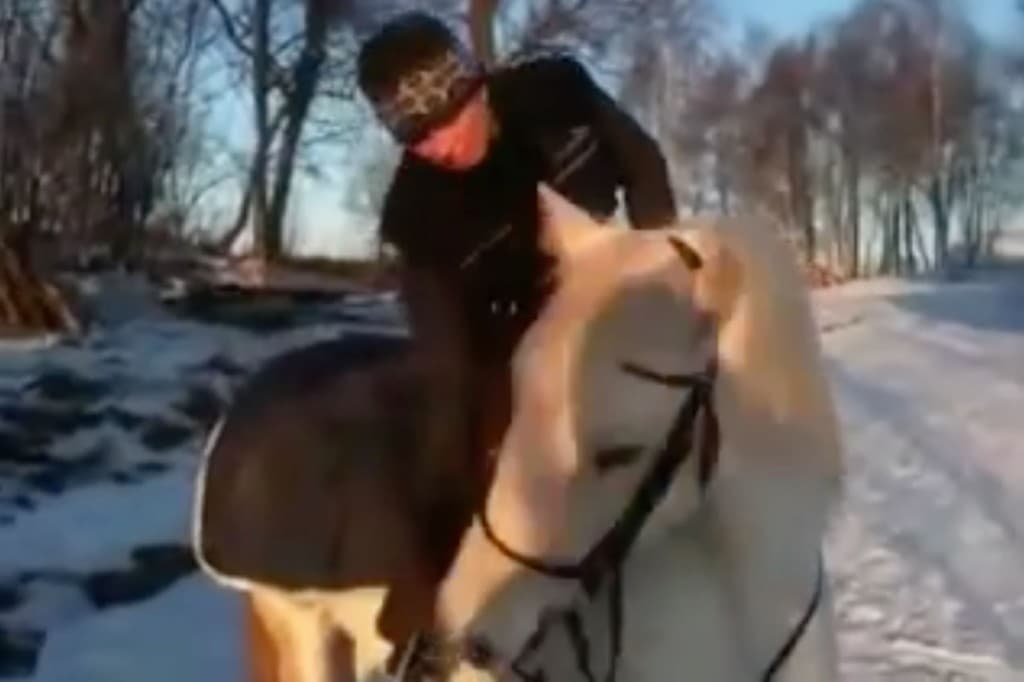
The film comes a bit further down in the blog, but read the rest before you jump to it!
We want to first emphasise that what is shown in the film is advanced training. Before you begin with this, you first need to know quite a bit about horses in general (you don't start with this before you CAN ride!). In addition, you should already be well trained in clicker training. And if you want to become skilled at clicker training horses, you should first spend time clicker training the horse to do simpler things from the ground.
The horse training we have shown examples of so far is things that anyone can clicker train with their horse. Regardless of how you train your horse when you ride, you will benefit from training it with reward-based methods in simple stable manners. But if you want to clicker train your horse more comprehensively, you simply have to make a choice. You have to decide that "yes, I WANT a clicker-trained horse".
The reason we emphasise this is that clicker-trained horses will not be quite like "ordinary" horses. Unfortunately, it is the case that many horse owners (thankfully not all) regard a PASSIVE horse as a FRIENDLY horse. Many horses are punished until they have no initiative left, and barely dare to do anything at all without being asked.
A clicker-trained horse will not be as passive as this. It can, especially early on in training, quite regularly come up with behaviours to try out whether they lead to a reward. Good clicker trainers want this! The fact that the horse is active gives us the chance to teach it new things much more easily. But for horse people used to a passive horse with no initiative whatsoever, this can actually be quite frightening. They quickly feel that they no longer have control of the horse. And if they then start punishing the horse, it becomes very confusing for it.
Let us illustrate this with a little story. A girl had problems with putting a headcollar on her horse. A couple of clicker trainers offered to help her teach the horse this. They started the training roughly as I have shown in an earlier film and made quick progress.
Later the same day, the same horse was standing in the wash bay and was being sprayed on the legs by the owner. The horse stood politely and calmly and behaved quite nicely. The clicker trainers stand some distance away and chat amongst themselves while they watch the horse. Suddenly they see that the horse is looking curiously at the chain that is attached to the headcollar. The horse thinks for a couple of seconds, it gets a lively expression in its eyes, opens its mouth and takes the chain in its mouth – exactly as it had learned to do earlier in the day with the bit of the headcollar. It was clear that the horse was testing out whether the same behaviour worked in this situation.
Well, it did NOT. The owner became angry and hit the horse for biting the chain (even though it was standing politely and prettily). The clicker trainers who watched got really upset seeing this. They politely informed the owner that they did not wish to clicker train the horse any further. It had simply become too unfair to the horse when the owner treated it completely differently throughout the rest of the day.
So before you begin to clicker train your horse, you should think through "how clicker-trained" you want your horse to be. Is this training compatible with the others who are around your horse every day (for example in the stable)? And not least, you should consider that if you clicker train your horse, it is not entirely unproblematic to later sell it on to others who train in completely different ways. It would be very unfair to the horse.
My horses are *never* sold once they have come into our house. That is something I am very conscious of. Not that I want to sell them – you develop a very special relationship with your horse when you clicker train it. You get to know its personality in a completely different way than other horse people do. It quickly becomes much more than just a "means of transport"…
Teaching the horse to back up\
OK, back to the film. I show here how I train the horse to back up. As with all other clicker training, I start first by getting the behaviour to happen voluntarily. First I click the horse for backing up whilst I stand on the ground. When that works, I reinforce the same behaviour voluntarily while I am sitting on its back.
When the horse backs up nicely voluntarily whilst I am sitting on its back, I start to add the cue (steps 1-2). The cue is how I use my legs, shift my weight in the saddle